

Trade-In Programs for Bookstores, Thrift Shops, and Resellers: A Practical Playbook
Bookstores have swapped used books for store credit for decades. What's new is running a trade-in program without appraising every item by hand, and reaching traders far beyond your own counter. Here's a step-by-step playbook for bookstores, thrift shops, and resellers.
By Promise Ebere Okoroji · · 7 min read
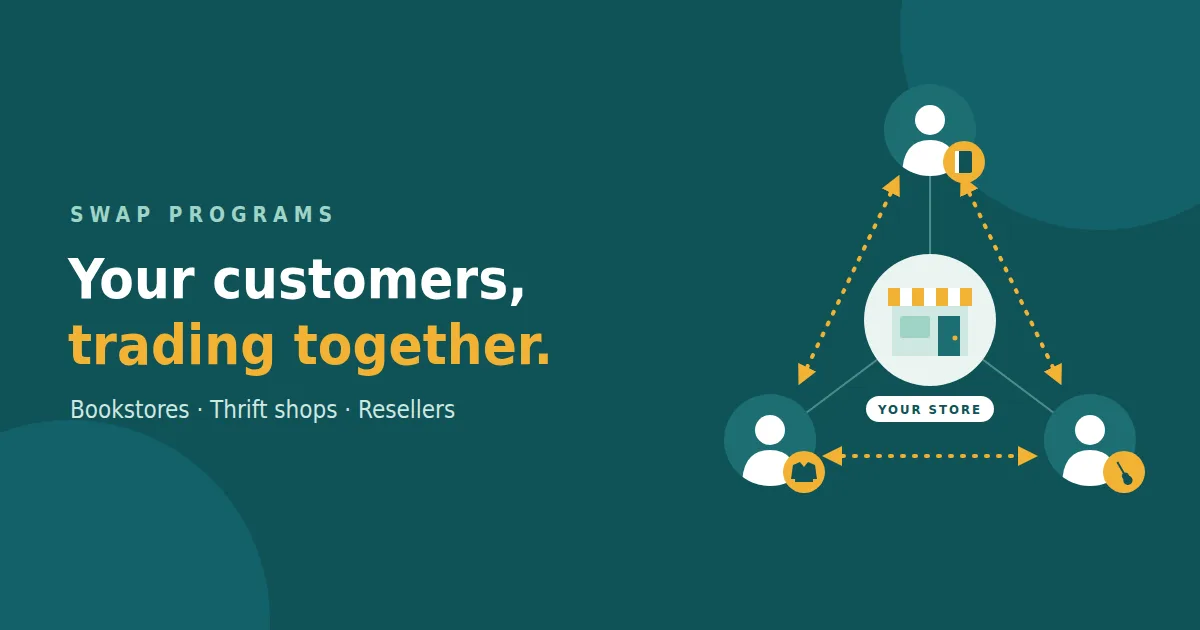
Readers have always passed books along. Shoppers have always swapped clothes with friends. Musicians have always sold their first guitar to the next beginner. People who love the same things naturally want to trade with each other.
Independent stores are often where those people already gather. A swap program builds on that: it gives your customers a trusted way to trade with each other, through your store, with the matching and the math handled for them.
This playbook covers the decisions every swap program needs, then walks through how they apply to bookstores, thrift and consignment shops, and resellers.
How a swap program works
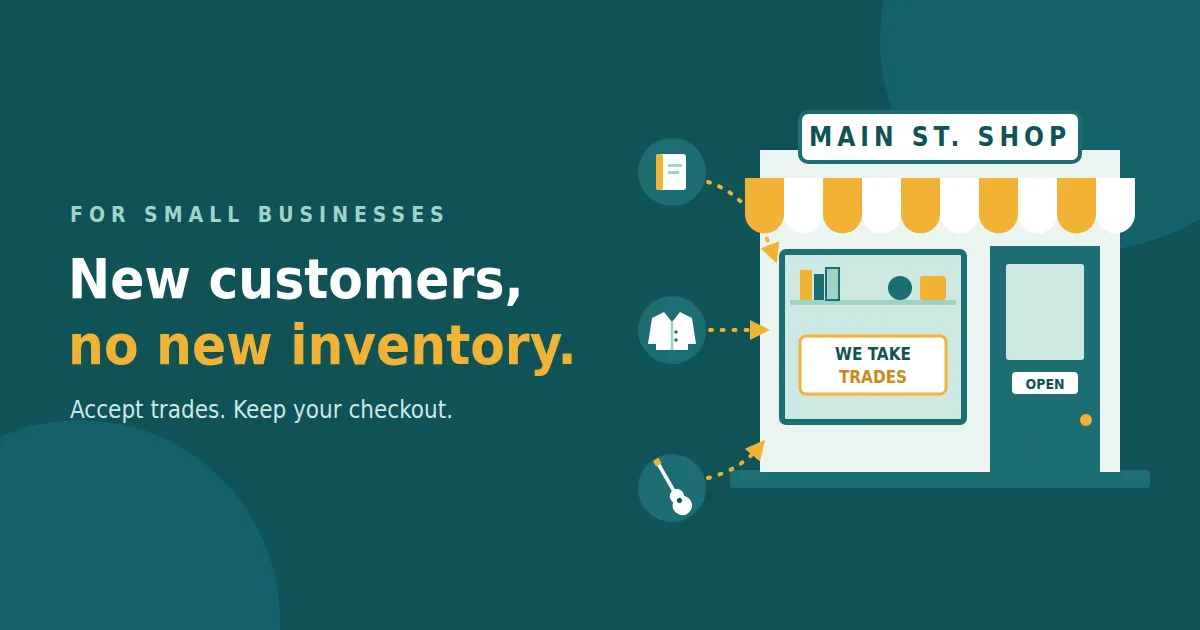
With TBBN, your store doesn't trade with customers itself. Your customers trade with each other. Your store provides the place, the rules, and the checkout.
A customer lists an item they own through your platform and says what they'd accept in return. TBBN's matching engine finds other customers with compatible items, the two sides agree on a trade, and TBBN calculates any difference in value. Once a trade is accepted, both items are reserved and each person goes to checkout, where you collect payment, tax, and your commission, just as you would for any sale. Fulfillment then follows your own rules. You can read the full flow on How TBBN works.
Why now
Two trends make this a good moment to start.
Independent retail is growing. The American Booksellers Association reported that 605 independent bookstores opened in the U.S. in 2025, the fifth year in a row with more than 200 openings. More independent stores means more competition for the same customers, and a reason to stand out.
Secondhand is mainstream. ThredUp's 2026 Resale Report found the U.S. secondhand apparel market grew 19% in 2025, outpacing the broader clothing market by about 3.6 times. Shoppers increasingly expect that what they own has a second life.
A swap program puts your store right where those two trends meet.
The seven decisions every swap program needs
Make these decisions before you launch, write them down, and share them with your staff.
1. What can be traded
Decide which categories your customers can list for trade. A bookstore might start with books only. A thrift shop might allow clothing and accessories but not furniture. Starting narrow and expanding later is perfectly fine.
2. Listing and condition standards
Set clear rules for what a listing must include, such as photos, condition, and accurate sizes or editions. Every item on TBBN carries an original price, set by the person listing it, and TBBN never sets or discounts it. Clear standards make trades smoother and disputes rarer.
3. Private, global, or both
With private trading, your customers trade only with each other, inside your own app or site. It keeps the program close-knit, and it suits communities where people already know and trust each other.
With global trading, your customers can also trade with people on other participating platforms across the TBBN network. They get far more potential matches, and when an outside trader trades for an item listed through your platform, they check out through your checkout.
4. Your commission and fees
You collect payment, tax, and commission at checkout. Decide what commission you'll charge, and whether you'll pass on TBBN's per-checkout fee or absorb it. See pricing for current fees.
5. Fulfillment and returns
Fulfillment follows your own rules, and you remain the merchant of record. Decide how traded items will reach each person and how returns will work, and make sure your policies cover traded items.
6. How you connect
TBBN offers four integration paths: a plugin (Shopify now, with WooCommerce, Magento, and BigCommerce listed as next), embeddable widgets, SDKs, or the full API. Most small shops start with the plugin or a widget.
7. How you'll tell people
A swap program nobody knows about won't do much. Plan your signage, a line on your receipts, a note on your website, and a short explanation your staff can give in a sentence or two.
Playbook: independent bookstores
Books are ideal for swapping: easy to describe, easy to grade, and readers always want the next one.
What it looks like. Your regulars list books they've finished and say what they'd like to read next. TBBN matches them with other readers who have those books and want theirs. The store becomes the hub of a reading community, not just a place to buy.
Tips:
- Set firm condition rules, for example no water damage, no missing pages, and limited highlighting.
- Encourage specific wants. "The next book in this series" or "anything by this author" produces better matches than "any fiction."
- Plan for seasonal spikes. Students swapping textbooks at the start and end of each term can drive a lot of activity.
- Connect it to your events. Book clubs and author events are natural places to promote the program.
Playbook: thrift and consignment shops
Thrift and consignment shops usually have plenty of loyal shoppers but small operations teams, so the priority is a program that doesn't add work.
What it looks like. Shoppers list clothes and accessories they no longer wear and trade with other shoppers who want them. An embeddable widget can add trading to your existing storefront with little or no engineering work, while your point-of-sale and fulfillment stay as they are.
Tips:
- Ask for clear photos and accurate sizes with every listing, to cut down on back-and-forth.
- Set category limits if you want to keep the program focused.
- Promote seasonal swaps, such as coat swaps in the fall and summer clothes in spring.
- Keep it social. Shoppers who swap with each other often become your most engaged regulars.
Embeddable widgets are part of TBBN's Growth plan. See pricing for current details.
Playbook: resellers, vintage stores, and specialty shops
Resale platforms, vintage stores, and specialty shops such as musical-instrument stores deal in higher-value items where condition and authenticity matter.
What it looks like. A musician outgrowing a starter instrument can trade it, plus the difference in value, toward another customer's better one. A vintage collector can swap pieces with others who share their taste. With global trading, your customers can be matched with traders on other participating platforms, widening what's available to them without you carrying any extra stock.
Tips:
- Publish clear listing standards for designer goods, electronics, and instruments, including what details and photos are required.
- Show the difference in value upfront. People trading up expect to pay a gap, and they want to see it clearly.
- Use global trading for hard-to-find items. If none of your customers has what someone wants, a trader elsewhere on the network might.
How to tell if it's working
Pick a handful of numbers and check them monthly:
- Trades completed per week or month.
- Active traders among your customers.
- New customers who first reached you through a trade.
- Repeat visits and purchases from customers who trade.
- Commission earned from trade checkouts.
If trading is keeping regulars engaged and bringing in new people, the program is doing its job.
Common mistakes to avoid
- Unclear rules. Most frustration comes from people not knowing what can be listed or what condition is acceptable.
- Untrained staff. Make sure everyone can explain the program quickly.
- Forgetting about taxes. You remain the merchant of record, so check with your accountant how traded items should be treated.
- Launching quietly. Tell people, then tell them again.
Bonus: host drop-offs and meetups, too
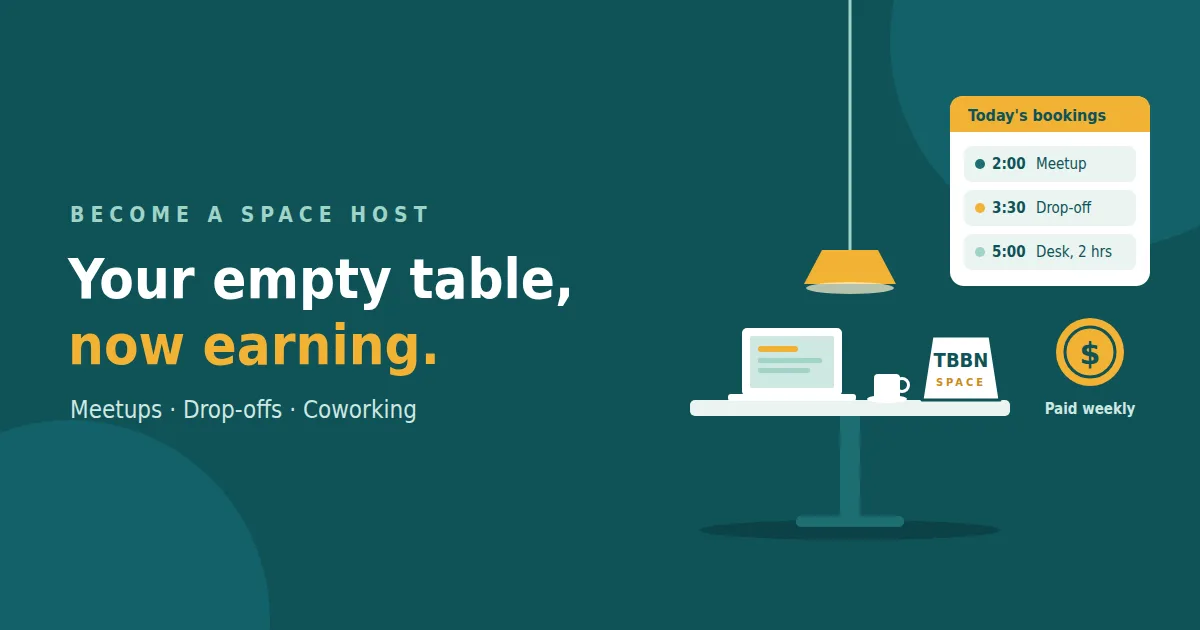
Your customers may want to meet or hand off items in person. If you have a secure counter, a back room, or a spare table, you can list your store as a TBBN Space for meetups or drop-off and pickup. You earn a fee for each booking, plus the foot traffic that comes with it.
How to get started
- Make the seven decisions above, and write them down.
- Create your business account at business.tbbnetwork.com and try the free sandbox.
- Choose your integration path: plugin, widget, SDK, or API.
- Launch, promote, and track your numbers each month.
The bottom line
Your customers already have what other customers want. A swap program gives them a trusted place to find each other, and that place is your store. TBBN handles the matching and the math, you keep your checkout and your commission, and your community does the rest.
Set up your business · See use cases · View pricing
Sources
- American Booksellers Association, 2025 Annual Report press release (May 2026)
- Chain Store Age, ThredUp: U.S. secondhand apparel sales to hit $78.8B by 2030 (2026)
- TBBN, How TBBN works, Use cases, Solutions, and Pricing

0 comments
Log in or create a free account to join the conversation.
Loading comments…