

Pay Only the Difference: How Uneven Trades Actually Work
Two items are almost never worth exactly the same, and that gap is where most trades fall apart. Here's how TBBN works out the difference in value, who pays it, and how to set numbers that get your trade accepted.
By Promise Ebere Okoroji · · 6 min read
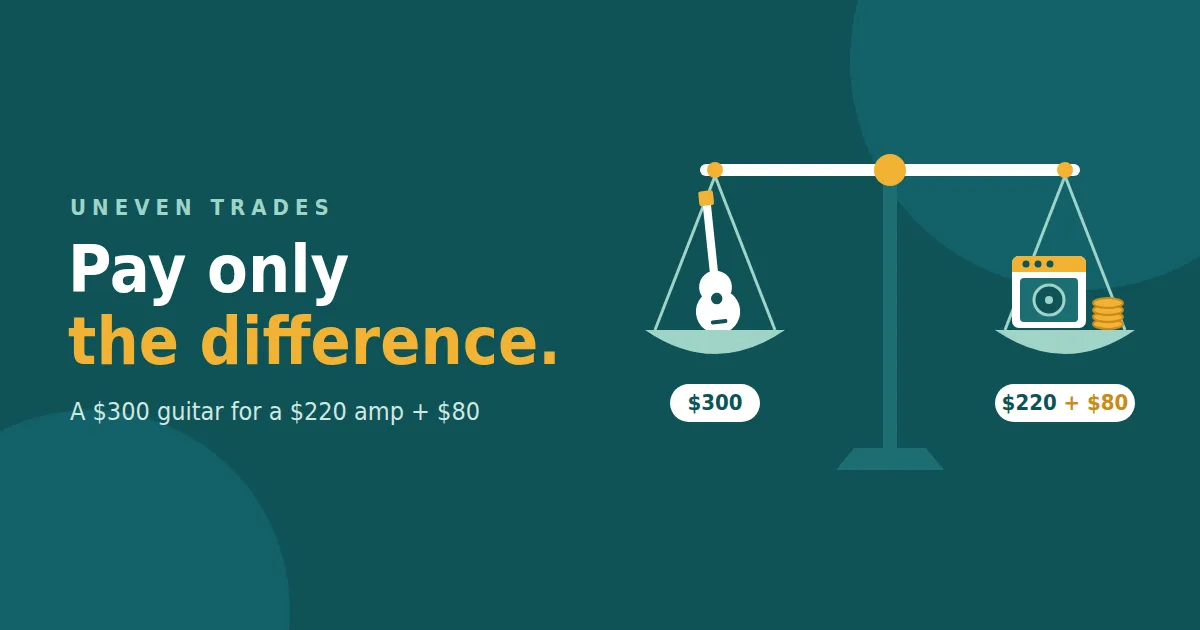
Imagine you have a guitar you no longer play, and you'd love a good amplifier. Someone nearby has exactly the amp you want, and they'd happily take a guitar for it. Perfect match.
Except the guitar is worth $300 and the amp is worth $220.
This is where most trades fall apart. One person feels they're giving away too much, the other doesn't want to haggle, and the conversation fizzles out. It's one of the oldest problems with barter: two things are almost never worth exactly the same.
The solution is simple: trade the items, and settle the gap with a cash difference. The person getting more value pays the difference, and nobody has to pretend a $300 guitar and a $220 amp are equal. Here's how TBBN makes that work.
It starts with a price
Every item on TBBN is listed with an original price before it can be opened for trade. That's the value the owner puts on the item, and TBBN never sets or discounts it.
This one rule does a lot of work. It means every trade starts from two numbers both people can see, rather than a vague sense of what something is "probably worth." It also gives each trade a clear, consistent value, which is what taxes are based on.
The three numbers in every trade
When two people negotiate a trade on TBBN, three numbers come into play:
- Original price: the value the owner listed the item at.
- Requested amount: any extra cash the owner asks for on top of the item they receive.
- Willing to pay: any cash the other person offers to add to their side.
TBBN combines them using a simple formula:
Trade value = Original price + Requested amount − Willing to pay
The trade value is how much needs to be covered by the item (or items) offered in return. TBBN calculates the difference automatically, so both people see the exact numbers before anyone accepts.
That sounds abstract, so let's walk through some examples.
Example 1: closing the gap with cash
Priya lists her guitar at $300. She'd take an amp in return and isn't asking for anything extra, so her requested amount is $0.
Sam has an amp listed at $220. He offers it for Priya's guitar and says he's willing to pay $80.
Trade value of the guitar = $300 + $0 − $80 = $220
That matches Sam's amp exactly. Priya gets the amp plus $80, Sam gets the guitar, and both walk away with the full value they listed.
Example 2: when the owner asks for a little extra
Jordan lists a pair of sneakers at $150 and adds a requested amount of $25, so his asking value is $175.
Alex offers a jacket listed at $120 and is willing to pay $55.
Trade value of the sneakers = $150 + $25 − $55 = $120
That matches Alex's jacket. Jordan gets the jacket plus $55, and Alex gets the sneakers.
The requested amount is useful when an owner feels an item is worth a bit more to them in a trade, or wants a little extra to make swapping worth their while. It's shown upfront, so nobody is surprised by it.
Example 3: offering more than one item
You don't have to close a gap with cash. On TBBN, either side can offer one item or several.
Say Sam doesn't want to pay $80 for Priya's guitar. Instead, he offers his amp ($220) and a guitar pedal ($70). That's $290 in items against a $300 guitar. Sam adds $10 to cover the rest, and the trade is done with almost no cash at all.
Bundling is a great way to clear out several things you no longer use while getting the one thing you actually want.
Who pays the difference, and how?
How the difference is settled depends on who you're trading with.
Trading with another individual
When you trade directly with another person, TBBN works out the difference and shows it to both of you. How you pay each other, and how the items change hands, is up to you. Items listed by individuals aren't eligible for TBBN checkout or shipping, and TBBN doesn't take part in payments or delivery between individual traders.
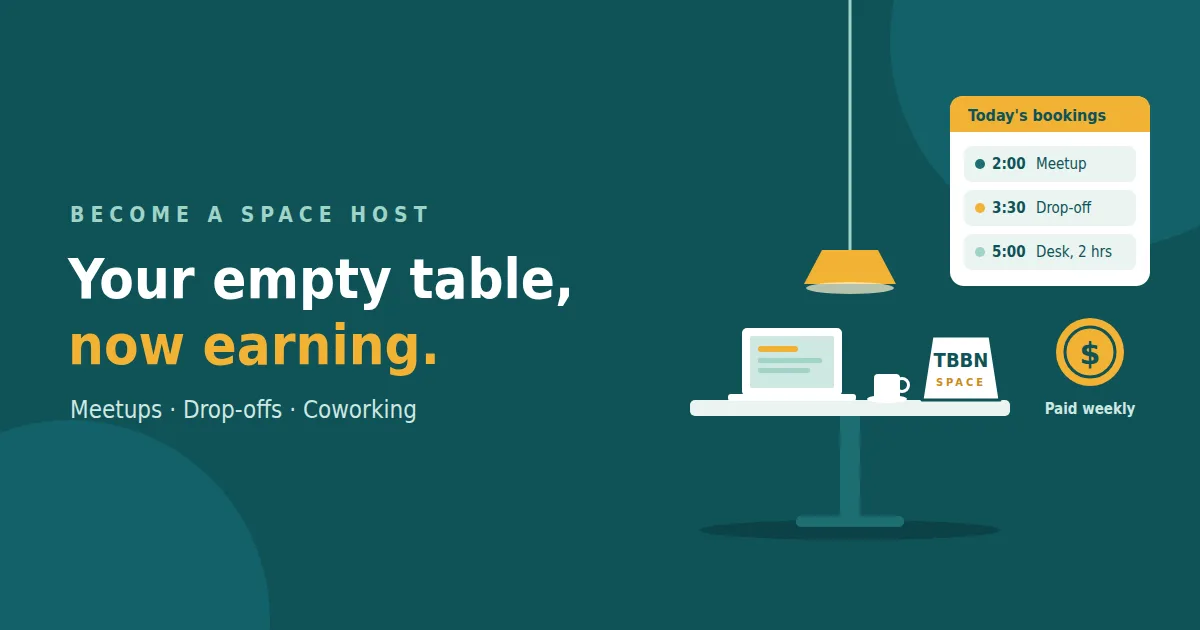
You can meet in person, use drop-off and pickup at a TBBN Space, or arrange shipping yourselves.
That means a few habits are worth keeping:
- Agree on the payment method before you hand anything over, and keep your messages on the platform so there's a record of what you agreed.
- If you're using drop-off and pickup at a TBBN Space, only send payment once you get a drop-off confirmation, so you know the item is waiting for you.
- If you're the one being paid, check the money has really arrived by opening your banking or payment app yourself. Don't rely on screenshots, confirmation emails, or links.
- Never accept more than the agreed amount, or any request to refund an "overpayment." It's one of the most common scams the FTC warns sellers about.
Trading items listed through a merchant
Checkout and shipping are available only for items listed through a participating merchant. When a trade involves merchant-listed items, the process is handled through checkout:
- Once the trade is accepted, TBBN reserves both sides' items, so neither can be sold to someone else in the meantime.
- Each side pays through the other side's merchant checkout. TBBN never runs a checkout of its own.
- Both sides can pay immediately, in either order. Nobody waits for the other person.
- Each side's shipment starts as soon as that side has paid, not once both have.
The merchant handles tax, shipping, returns, and customer service under its own policies, exactly as it would for a normal sale.
Why this beats selling and buying separately
You could, of course, sell your guitar and then buy an amp. But that's two separate transactions. You'd need to find a buyer willing to pay your price, deal with offers and no-shows, and then go and find the amp you want and pay for it in full.
Trading with a difference collapses that into one exchange:
- You need far less cash. You pay (or receive) only the gap, not the full price of the item you want.
- Nobody has to haggle over "equal" value. The numbers are on the screen from the start.
- Both people get what they listed. The person giving more value gets compensated for it.
- It's one transaction, not two. Less time, fewer messages, and fewer chances for something to go wrong.
How to set numbers that get accepted
The math is simple, but a few habits make your trades much more likely to go through:
- Price honestly. Look at what similar items in similar condition actually sell for. An inflated original price makes every trade harder, because the gap gets bigger.
- Use the requested amount sparingly. A small ask is fine. A large one can make your item look overpriced next to others.
- Describe the condition clearly, with good photos. The more confident the other person is in your item, the more likely they are to accept the numbers.
- Be open to bundles. If the gap is large, ask whether the other person has a second item you'd take.
- Say what you'd accept in return. The more specific your wants, the better TBBN's compatibility engine can match you with people whose items, and numbers, fit.
For businesses: trade-ups without the math
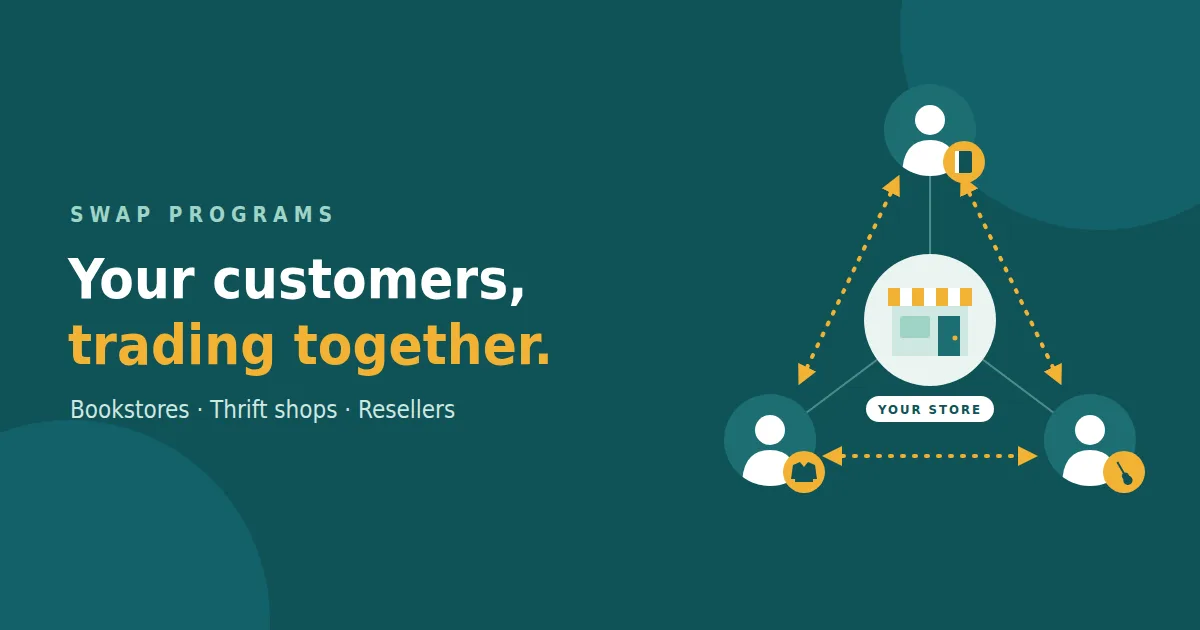
For stores, the difference is what makes a trade-in or trade-up program work. A customer brings in a starter guitar and puts its value toward a better one. A student trades last term's textbooks toward this term's.
TBBN handles the matching and calculates the difference. Your store sets its own prices and decides what it accepts. TBBN sends your checkout the original price and the trade amount, so you can calculate tax and commission exactly as you would for a normal sale, and you remain the merchant of record. TBBN never takes a cut of what a trade is worth.
See how TBBN works for businesses or browse use cases.
The bottom line
Two items are almost never worth the same, and that used to be the end of the conversation. Now it's just a number on the screen.
List your item with an honest price, say what you'd take in return, and let the difference do the rest.
0 comments
Log in or create a free account to join the conversation.
Loading comments…