
Meeting a Stranger From an Online Marketplace? Read This First
Most online trades end with a handshake. But police across the country are warning about meetups that turn into robberies, and "just meet in a public place" isn't enough anymore. Here is what the evidence says, what a truly safe handoff needs, and how you can earn by offering one.
By Promise Ebere Okoroji · · 10 min read
Buying and selling with people nearby is one of the best things the internet has made possible. You find a used bike for half the price of a new one. You turn an old phone into cash. You trade something you don't need for something you do. Millions of these exchanges happen every week, and the vast majority end with nothing more dramatic than a handshake.
But every one of them depends on the same awkward step: meeting a stranger. And police across the country are increasingly warning that this step is where things go wrong.
This post looks at what the evidence actually says about marketplace meetups, why the standard advice falls short, and what a genuinely safe handoff looks like. If you run a business or have a suitable space, it also explains how you can earn money by offering one.
The risk is real, and it isn't rare
It's easy to dismiss marketplace crime as the occasional bad headline. Recent police reports suggest otherwise.
- In Maryland, Prince George's County police linked 48 serious crimes in 2026 to in-person transactions arranged online, including robberies, assaults, and homicides. The police chief noted that both buyers and sellers were victims. Some meetings were planned as robberies from the start, and others escalated after the two people met.
- In Oregon, the Portland Police Bureau said its Major Crimes Unit had investigated at least 10 online-marketplace transactions in 2026 that ended in robberies or other crimes, including a seller who had an e-bike taken at gunpoint.
- In Atlanta, police reported three armed robberies in July 2026 alone, all arranged as meetups to buy gaming consoles.
- In Chicago, prosecutors charged one man with robbing nearly a dozen people at gunpoint during Marketplace meetings over just a few months. One victim lost $8,000 in cash he had brought to buy an item.
These aren't isolated cases. A ProPublica investigation found that criminals had used Facebook Marketplace to commit armed robberies across the US, and identified 13 cases that ended in homicide in the first part of the pandemic alone.
Police in Arlington, Texas have also noted that the items thieves most often target in these exchanges are sneakers, phones, laptops, and tablets: small, valuable, and easy to resell. That's exactly the kind of thing people trade every day.
Much of the danger starts before you meet
Not every risk is physical. Many marketplace scams are designed to get your item or your money without a meeting at all.
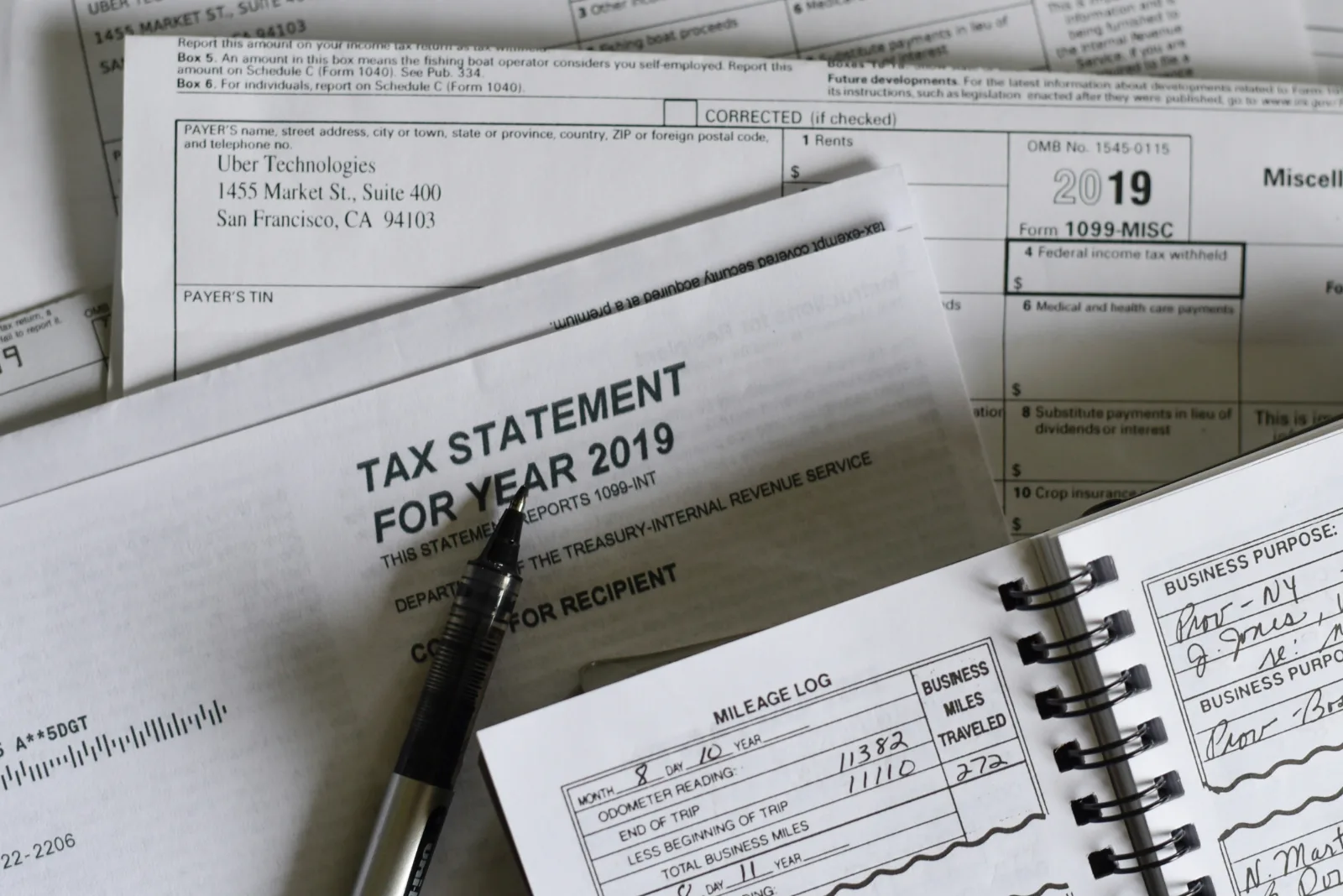
The FTC's Consumer Sentinel data shows that consumers reported $15.9 billion in fraud losses in 2025, up from about $12 billion the year before, and online shopping was the second most commonly reported fraud category. The FTC has also warned sellers about a few patterns that come up again and again:
- Fake payment notifications. The "buyer" sends a convincing screenshot or email showing a payment that never actually happened, and hopes you hand over the item before you check.
- Overpayment checks. The buyer sends a check for more than the price and asks you to refund the difference. The check bounces weeks later, and your bank takes the money back.
- Fake verification codes. The buyer asks you to "prove you're real" by reading back a code, which is actually being used to take over one of your accounts.
The common thread is getting you to act on a payment you haven't actually confirmed. That's worth remembering whenever you trade.
Why "meet in a public place" isn't enough
For years, the standard advice has been simple: meet in a busy, public place. It's still good advice. But the cases above show its limits: several of those robberies happened at locations that looked ordinary and public.
The problem is that a parking lot or a store entrance is public, but nobody there is responsible for you. People walk past. Nobody knows you're about to hand an expensive phone to someone you've never met.
Many police departments have responded by creating safe exchange zones: marked parking spaces outside police stations with lighting and video surveillance. They are a genuinely good idea, and if one is near you, use it. But they come with real limits that departments are open about:
- Nobody is there to help in the moment. Bedminster Township, New Jersey states that it provides no staff to witness transactions and makes no guarantees about safety. Carmel, Indiana notes that officers won't take part in or witness exchanges.
- Cameras help mostly after the fact. San Luis Obispo County explains that its zones are there so officers have video evidence if something goes wrong, not to supervise transactions.
- They aren't foolproof. In Chicago, at least one meetup at a police station still ended in a robbery.
- They're built for a quick handoff, not a careful one. A parking space is not a good place to test a laptop, try on shoes, or check that a camera works.
Safe exchange zones prove something important: people want somewhere safer to meet, and communities are willing to provide it. What's missing is a place that is hosted, scheduled, and designed for the whole exchange.
What a safe handoff actually needs
Put together what police and consumer protection agencies recommend, and a safe exchange needs a few things:
- A host. Someone at the location who knows a meeting is happening, and a place where staff and other people are present.
- A record. A booking that shows who is coming and when, so the meeting isn't anonymous.
- Somewhere to inspect the item. A table, good lighting, and a power outlet, so you can check that what you're getting is what was described.
- Payment you can verify. Whatever method the two people agree on, the money should be confirmed as received before the item changes hands, rather than trusting a screenshot, a check, or a promise.
- The option not to meet at all. Sometimes the safest meeting is no meeting.
How TBBN Space works
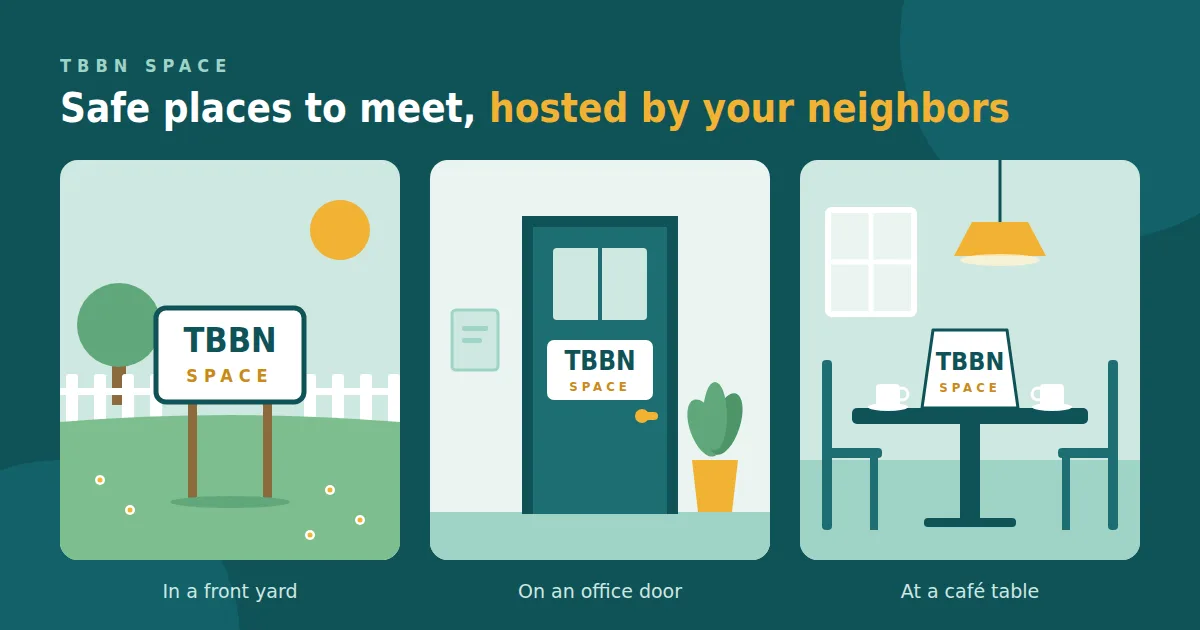
TBBN Space is a network of real, hosted locations built around exactly those needs. Spaces are run by local businesses and individuals, and there are four ways to book one:
- Meetup: meet the other trader at a hosted location, with a table to sit at and inspect the item together.
- Drop-off and pickup: one person leaves the item with the host, and the other collects it later on their own schedule. The two traders never have to meet.
- Coworking: book a desk, office, or meeting room by the hour or day.
- Both: a meetup and a drop-off window on the same booking.
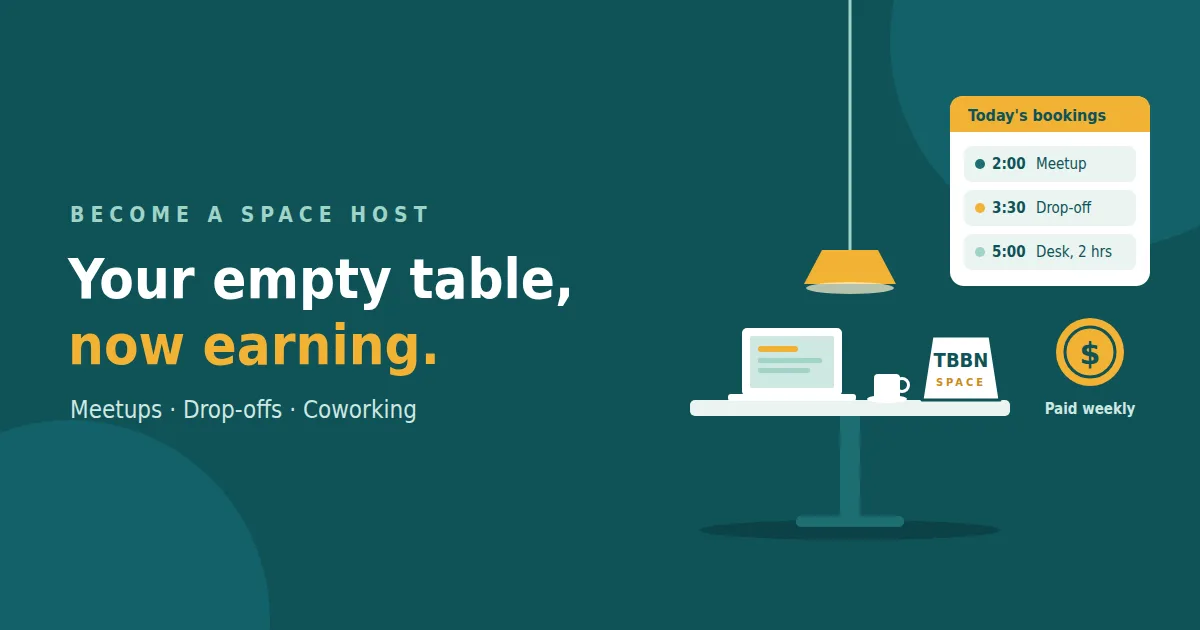
Every booking appears on the host's calendar with the time, the service, and who is coming.
A Space is where two traders verify each other's items and make the exchange. How they settle any difference in value is up to them: TBBN doesn't take part in payments between individual traders. That makes the payment habits in the checklist below especially important.
Items listed by participating merchants work differently. Those are paid for through checkout and fulfilled by the merchant under its own policies, so there's no meetup with a stranger at all.
A safety checklist for any meetup
Wherever you meet, these habits make a real difference:
- Use a hosted Space or a police safe exchange zone whenever you can. If the other person refuses to meet somewhere safe, treat that as a warning sign.
- Never share your home address. Agree on a neutral location instead.
- Meet during daylight or business hours, and tell someone where you're going and when you expect to be back. Better still, bring a friend.
- Keep your conversation on the platform until you've met. Be wary if the other person pushes you to switch to text or email early on.
- Agree on the payment method before you meet, so there are no surprises at the handoff.
- Confirm payment in your own account before handing anything over, by opening your banking or payment app yourself. Don't rely on a screenshot, a confirmation email, or a link the other person sends you.
- Never accept payment for more than the agreed price, and avoid checks from people you don't know.
- Inspect the item before you complete the exchange.
- Be careful with "too good to be true" deals, and with buyers who accept your price instantly without any questions.
- Trust your instincts. You can walk away at any time.
Earn by offering a safe Space
Here's the part most safety articles leave out: a safe place to meet doesn't have to come from the police. It can come from the café on the corner, the shop down the street, or the coworking space that's half empty on a Tuesday afternoon. And the people who provide it can get paid for it.
TBBN Space lets businesses and individuals list a space for trades, handoffs, and work, and earn from every booking.
Who makes a good host?
- Cafés and coffee shops with a quiet table or corner that's underused outside peak hours.
- Local retailers and garden centers with a secure counter or back room for drop-offs.
- Coworking spaces with spare desks, offices, or meeting rooms.
- Community centers and business associations with a room that serves several purposes during the week.
- Individuals with a suitable, appropriate space they can host safely.
What hosts get:
- Income from space you already have. You set your own prices and availability.
- Bookings in one place. Every booking appears on your calendar, with the time, the service, and who's coming, and you can track your payouts.
- Control over drop-offs. For drop-off and pickup, you set a maximum time an item can wait to be collected and earn a fee for hosting the handoff.
- New foot traffic. Every trader who comes to meet or collect an item is a potential customer, often during hours that would otherwise be slow.
- A real role in your community. You become the trusted place people go when they don't want to meet a stranger in a parking lot.
Good hosting also comes with responsibilities. A good Space is well lit, has people around, and is somewhere you can keep an eye on. It's also worth checking your lease, local rules, and insurance before you list.
Become a TBBN Space host or see how businesses use Space. TBBN Space also runs an affiliate program if you'd like to help bring more hosts into your area.
The bottom line
Meeting a stranger to buy, sell, or trade shouldn't feel like a gamble. The evidence shows the risks are real, but they're also manageable: hosted locations, payment confirmed before anything changes hands, a record of who's coming, and the option to skip the meeting altogether.
TBBN Space brings those pieces together. If you trade, use one. If you have a space, consider offering one. Every new host makes it a little safer for everyone in the neighborhood to trade.
Find a safe Space · Become a host
Sources
- Federal Trade Commission, FTC testifies before the Joint Economic Committee on the agency's efforts to combat fraud (March 2026)
- Federal Trade Commission, Selling stuff online? Here's how to avoid a scam
- Experian, Fraud and identity theft losses in 2025, citing FTC data
- ProPublica, Facebook grew Marketplace to 1 billion users. Now scammers are using it to target people around the world
- WJLA, Prince George's County police warn of marketplace meetups after 48 linked crimes (2026)
- KGW, Portland police issue warning after Facebook Marketplace sellers robbed at gunpoint (2026)
- FOX 5 Atlanta, Facebook Marketplace meetups in Atlanta turn into armed robberies (2026)
- CWB Chicago, Prosecutors say he robbed 11 people during Facebook Marketplace meetups (2025)
- CBS News Texas, Arlington PD creates safe zone for online shopping exchanges
- Bedminster Township, NJ, Safe Exchange Zone
- Current Publishing, Carmel Police Dept. creates Safe Exchange Zone
- KSBY, Police stations set up zones for safe exchange of online business
0 comments
Log in or create a free account to join the conversation.
Loading comments…