

7 Reasons Barter "Doesn't Work" — and Why They No Longer Hold
Economics textbooks list seven reasons barter fails, from the double coincidence of wants to the impossibility of cutting a cow in half. They were real problems. Here is what each one meant, and how modern trading answers them.
By Promise Ebere Okoroji · · 7 min read
If you studied economics, you probably met barter in the chapter right before money. The lesson usually goes like this: barter had seven serious problems, money solved all of them, and that is why nobody barters anymore.
The problems were real. But the conclusion — that barter can't work — is a myth. Most of those problems came from the tools people had at the time, not from the idea of trading itself. Once you look at them one by one, it becomes clear that barter didn't fail on its own merits. It was waiting for better infrastructure.
Here are the seven classic problems, what they actually mean, and how a modern trade engine like TBBN's answers each one.
1. The lack of a double coincidence of wants
The textbook problem: For a trade to happen, both people must want what the other has. If you have a guitar and want a tablet, you need to find someone who has a tablet and happens to want a guitar. Finding that exact person is very hard, and most trades never happen because the match never shows up.
Why it no longer holds: This was always a search problem, not a flaw in trading. In a village of a few hundred people, the odds of finding your perfect match were low. On a network with many people, the odds change completely, as long as there is a way to find them.
That is what TBBN's trade-compatibility engine does. When you list an item, you also say what you would accept in return. The engine then looks for people whose wants line up with yours. It can work with partial overlap too: you don't need someone who wants your guitar specifically, just someone whose offer is close enough to what you're looking for. Instead of hoping to bump into the right person, you're shown the people who are already a good fit.
2. The lack of a common standard of value
The textbook problem: Without money, there is no shared unit for pricing things. How many pairs of shoes is a cow worth? How many bags of rice equal a goat? Every trade starts with an argument about exchange rates, and nobody can be sure they got a fair deal.
Why it no longer holds: Modern barter doesn't have to choose between goods and money. It can use both. On TBBN, every item must be listed with an original price before it can be opened for trade. That single rule gives every trade a common reference point in a currency everyone understands.
So when someone offers a camera for your bike, you're not comparing a camera to a bike. You're comparing a $450 listing to a $600 listing. Both people can see the values upfront, the gap is clear, and taxes are calculated from those original values, so the numbers are consistent from listing to checkout. The awkward guessing that made barter feel risky is gone.
3. The lack of divisibility
The textbook problem: Some goods can't be split without losing their value. The classic example: if you own a cow and want a loaf of bread, you can't cut off a slice of cow to pay for it. Big, valuable items were almost impossible to trade for small, cheap ones.
Why it no longer holds: The answer is a cash top-up. Because every TBBN listing has an original price, the platform knows exactly how far apart two items are, and the person getting more value pays the difference.
Here's an example. Ade lists a road bike at $600. Chen lists a mirrorless camera at $450. They agree to swap, and Chen pays Ade the $150 difference. Nobody has to cut a bike in half. The difference payment does the dividing, and each person pays their own side through their own checkout.
4. The difficulty of storing wealth
The textbook problem: In a barter economy, saving for the future is hard. Grain rots, livestock gets sick or dies, and many goods lose value just by sitting around. There was no reliable way to hold value until you needed it.
Why it no longer holds: This one deserves an honest answer: modern barter isn't trying to replace money as a way to save. Money and bank accounts already do that job well. Barter today works alongside money, not instead of it.
What barter does well is unlock value that's already sitting idle. The guitar in your closet, the camera you no longer use, and the stock a shop can't move are all stored wealth that is slowly losing value. Listing them for trade puts that value back to work, either as something you actually need or as cash from the difference.
5. The difficulty of deferred payments
The textbook problem: Barter makes loans and future payments messy. If you agree to repay a debt with three goats next spring, what happens if the goats get sick, or if goats are worth far more by then? Arguments about future payments were common, which made credit almost impossible.
Why it no longer holds: Modern trades don't need to rely on promises about the future. On TBBN, a trade is settled at the time it happens. Each person checks out independently, any difference is paid then and there, and each shipment starts as soon as that side has paid. Nobody is left holding an IOU, and because values are fixed at the original listing price, nobody argues later about what an item "should have been" worth.
6. The difficulty of transferring wealth
The textbook problem: Moving goods from one place to another was heavy, slow, and risky. Driving cattle to a distant market or carrying sacks of grain across the country meant losses, theft, and a lot of effort.
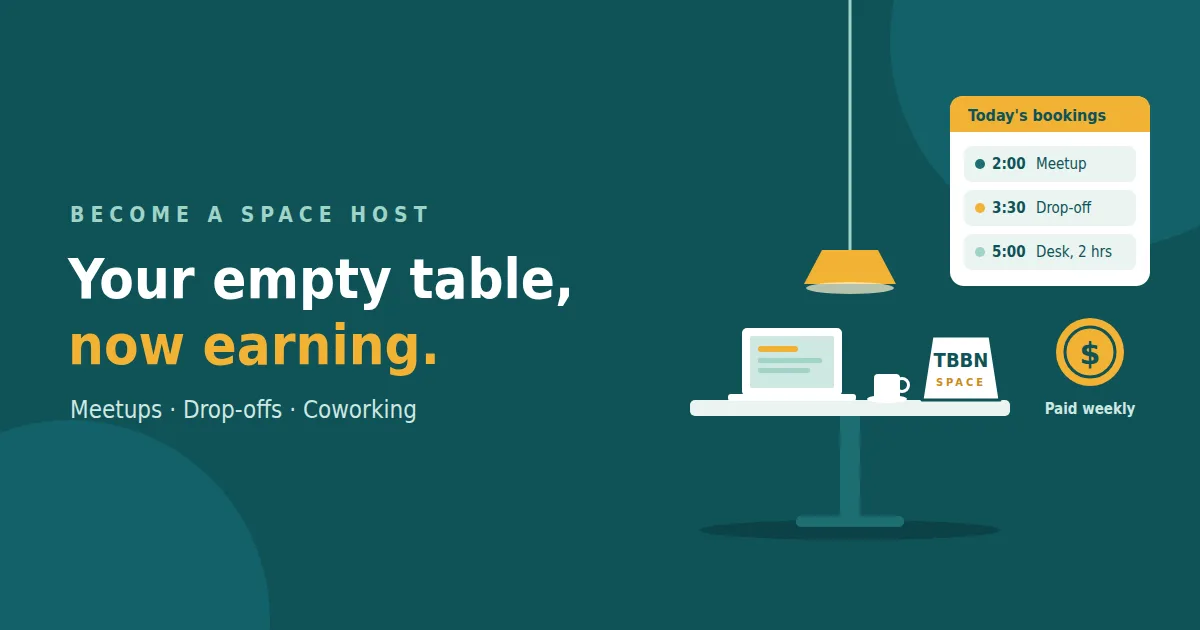
Why it no longer holds: Shipping networks and secure local handoff points have solved most of this. On TBBN, traders can ship items to each other, or use TBBN Space — a network of hosted locations where people can meet in person or drop off an item for the other person to collect later. You no longer have to haul your goods to a market and hope you find a buyer. The match is made online, and the physical transfer happens in whatever way is safest and most convenient.
7. The lack of specialization
The textbook problem: When barter was hard, people had to produce most of what they needed themselves, because they couldn't count on trading for it. A farmer also had to be a builder, a toolmaker, and a tailor. That made it hard to focus on one skill, which slowed down economic growth.
Why it no longer holds: This is the problem money solved most completely, and it isn't coming back. We live in a specialized economy, and nobody is suggesting otherwise. The point of modern barter is not to undo specialization. It's to let specialists — individuals and businesses — exchange more freely.
That's where businesses come in.
What this means for businesses
Each of the seven problems above comes down to missing infrastructure: no way to find matches, no shared values, no way to settle a difference, no safe way to hand items over. TBBN's trade engine was built to supply exactly those pieces, and it's available to businesses, not just individuals.
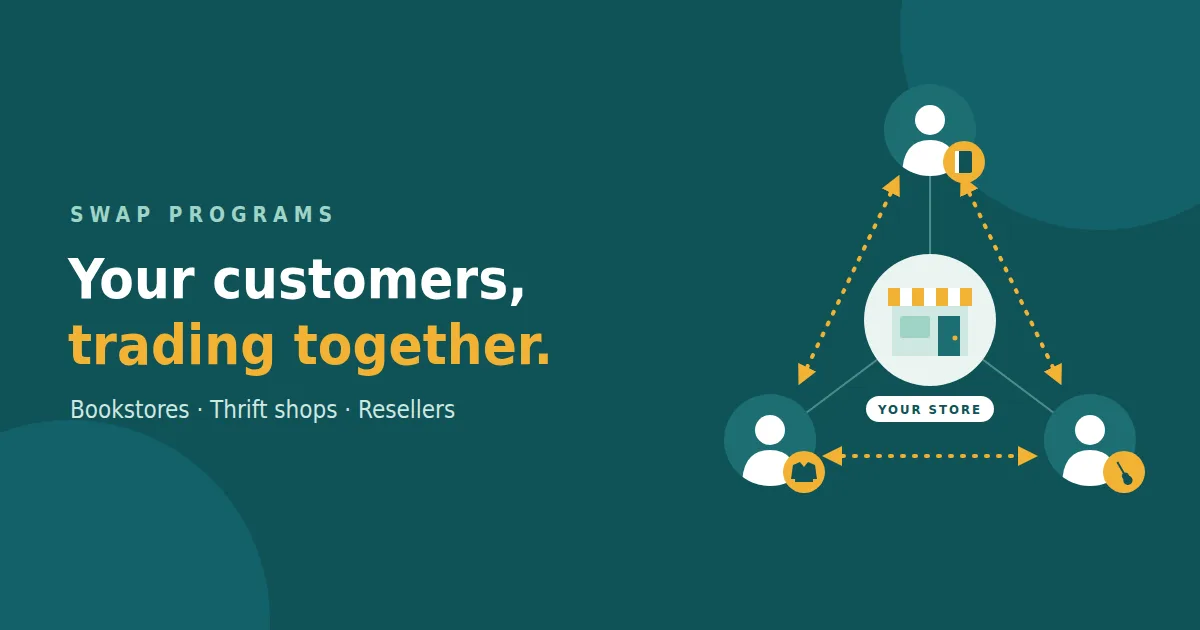
Bookstores, thrift shops, electronics resellers, sporting goods stores, and other businesses can build trading into their own store using TBBN's API, SDKs, embeddable widgets, or a plugin. In practice that means:
- Accept trades as part of a sale. A customer brings in a used item and puts its value toward something new from your shelves.
- Reach shoppers who want to trade. Your listings appear in the TBBN marketplace, in front of people actively looking for swaps.
- Keep consistent records. Because every item carries an original price, each trade has a clear value for your accounting and taxes.
- Keep control of your operations. You keep your own checkout, tax, and fulfillment. The trade engine handles the matching and value calculations.
- Keep the full value of every trade. TBBN never takes a cut of what a trade is worth.
For a store, a trading system is a way to bring in new customers, stock, and foot traffic without discounting what's already on the shelves. And you don't have to build the hard parts yourself.
The bottom line
The seven classic problems of barter were real, and money was a brilliant solution to them. But the conclusion that barter can't work only made sense in a world without search engines, shared price references, instant payments, and reliable shipping.
Today, every one of those pieces exists. TBBN brings them together so that trading is as straightforward as buying, for individuals clearing out their closets and for businesses that want a new way to sell.
List your first item, or if you run a business, see how to build trading into your store.
0 comments
Log in or create a free account to join the conversation.
Loading comments…